
Wine Bottles Decoded: Sizes, Shapes and Secrets
Wine bottles may look familiar, but there’s far more to them than meets the eye. From their unexpected names to their distinctive shapes, bottle formats carry history, practicality, and subtle clues about the wine inside.
Let’s uncork the essentials.
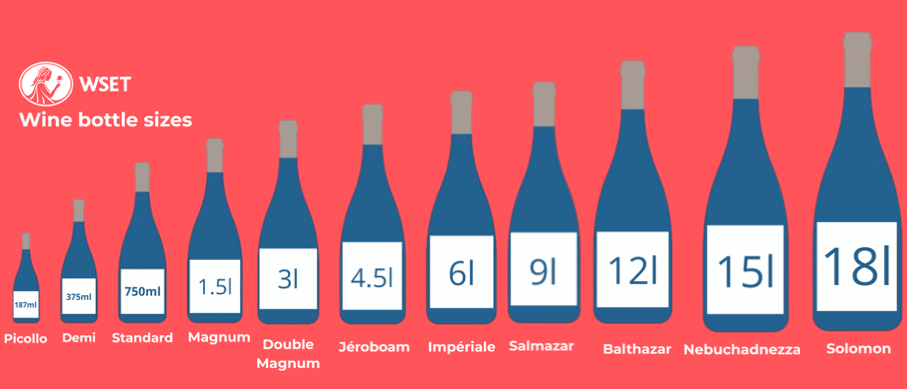
Wine Bottle Sizes: From Piccolo to Solomon
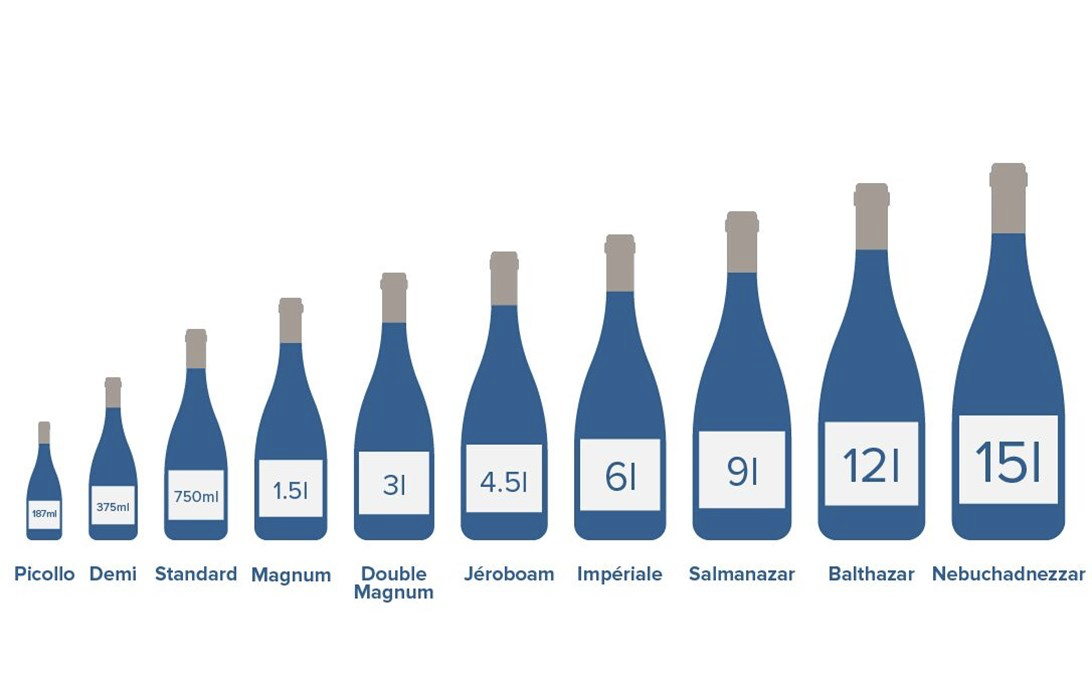
Wine bottles come in a surprising range of sizes, from a modest 187 ml to monumental formats holding up to 18 litres. Today, EU regulations allow a maximum of 10 litres for still wine and 9 litres for sparkling wine, but the traditional names remain part of wine culture.
Smaller formats are named simply by size, while larger bottles borrow their names from biblical kings and figures—a convention whose exact origin remains a mystery, but one that adds a certain theatrical flair to the wine world.
Here’s a practical overview:
- Piccolo / Split (187 ml)
Perfect for single servings, widely used in travel, hospitality, and events. - Benjamin Cava (specifically produced in 20cl mini-bottles), making it ideal for individual consumption, celebrations, and as an aperitif. It is a traditional blend of Macabeo, Xarel·lo, and Parellada grapes, known for its straw-yellow color, fine bubbles, and fresh, fruity aroma.
- Demi / Half Bottle (375 ml)
Exactly half a standard bottle—ideal for tastings or lighter occasions. - Standard Bottle (750 ml)
The global reference size and the most common format on shelves. - Magnum (1.5 L)
Equal to two standard bottles. Often preferred for ageing due to a slower oxygen-to-wine ratio. - Double Magnum (3 L)
The equivalent of four standard bottles. - Jéroboam (4.5 L – still wine)
Holds six bottles. In sparkling wines, this size is usually called a Rehoboam. - Impériale (6 L – still wine)
Eight standard bottles. Known as Methuselah for sparkling wines. - Salmanazar (9 L)
Twelve standard bottles. - Balthazar (12 L)
Sixteen standard bottles. - Nebuchadnezzar (15 L)
Twenty standard bottles. - Solomon (18 L)
A true showstopper: twenty-four standard bottles.
Wine Bottle Shapes: Reading the Wine Before the Label
Bottle shapes are not about improving wine quality, but rather the result of regional traditions and historical glassmaking techniques. Over time, these shapes became standardised and are now valuable visual cues.
Knowing them allows you to make educated guesses about a wine before reading the label.
The Main Bottle Shapes You’ll Encounter
Alsace (Germanic) Bottle
Tall, slim, and elegant, with gently sloping shoulders. Most commonly associated with Riesling. Bottles tend to be brown in Alsace and green in Germany.
Bordeaux Bottle
Straight-sided with high, angular shoulders. This is the most widely used bottle worldwide, traditionally linked to Cabernet Sauvignon and Merlot blends, but now used for many styles.
Burgundy Bottle
Recognisable by its sloping shoulders and wider body. Closely associated with Pinot Noir and Chardonnay, though also used for other varieties like Sauvignon Blanc.
Champagne (Sparkling Wine) Bottle
At first glance similar to Burgundy, but noticeably thicker and heavier. This added weight is essential to withstand the high internal pressure created during secondary fermentation.
Port (Fortified Wine) Bottle
Similar to Bordeaux, but with a bulge in the neck. This feature helps trap sediment during pouring—particularly useful for aged fortified wines.
Provence Bottle
Elegant and curvaceous, often compared to an hourglass or corset. Closely linked to rosé wines from Provence, and increasingly common due to the global popularity of rosé.
The Punt: Why Are Wine Bottles Concave at the Bottom?
That indentation at the base of the bottle is called a punt (or kick-up). While it doesn’t improve wine quality, it serves several practical purposes:
- In sparkling wines, a deep punt strengthens the bottle to resist pressure.
- It facilitates handling during production, especially when bottles are moved by suction.
- During service, it allows for a more secure grip when pouring.
Producing a bottle with a punt requires more glass and is therefore more expensive. However, a deeper punt is not an indicator of wine quality—just a stylistic and functional choice by the producer.
Final Thought
Next time you’re in a wine shop or opening a bottle at home, take a moment to look beyond the label.
The size, shape, and structure of the bottle already tell a story—you just need to know how to read it.
Curious to go further? Understanding packaging is just one step toward deeper wine knowledge.
At THE TASTY GLASS EDUCATION, we believe wine education starts with observation and curiosity.
Curious to learn more?
Imagine what you could discover with a structured approach to wine education.
Our WSET Wine qualifications provide internationally recognised training, combining theory and tasting to help you understand why wines taste the way they do — and how to assess them with confidence.